We’re Making a Difference

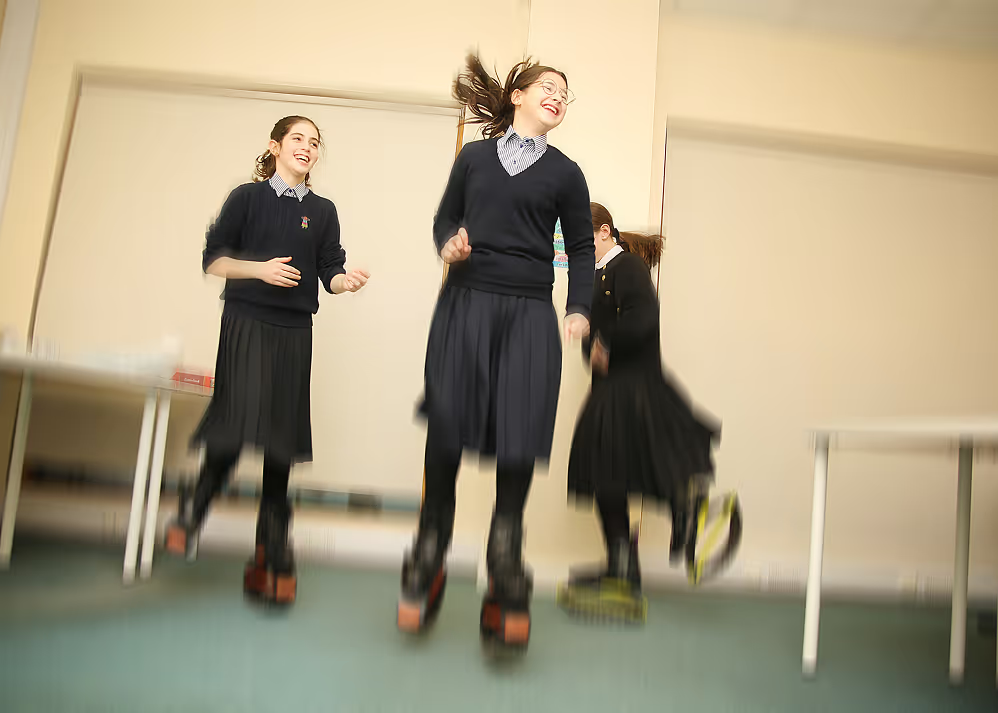
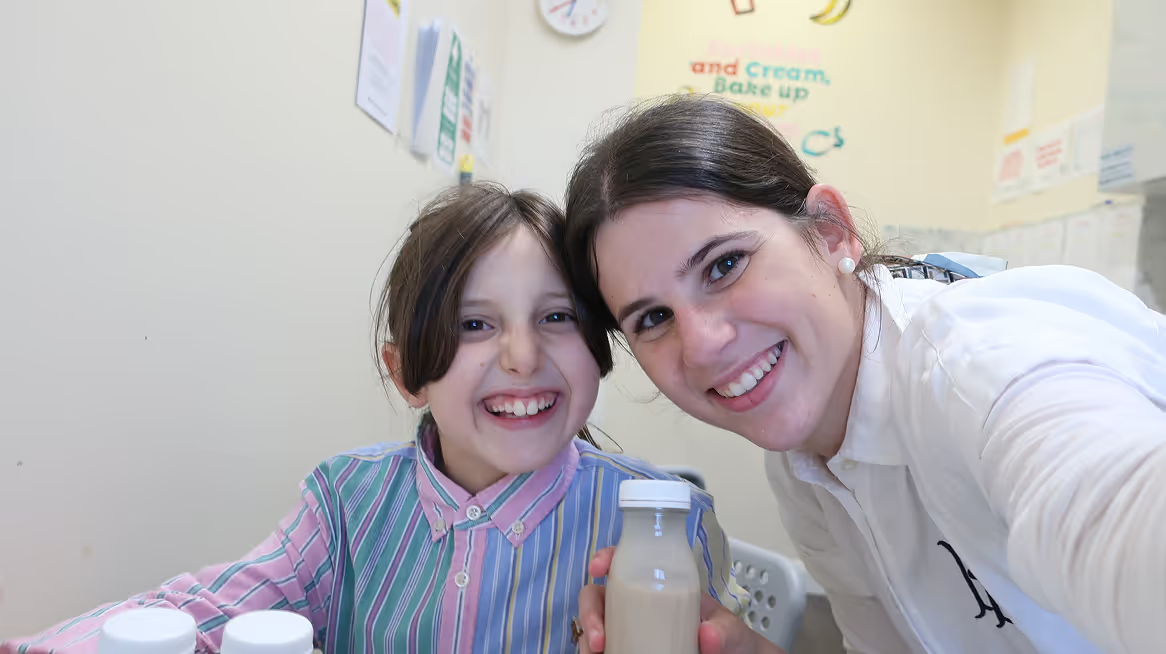
In 2023-24, we recruited and trained 140 new volunteers who dedicated 11,032 hours to building resilience and confidence in 198 girls through 7,668 one-to-one mentoring sessions. We also trained 60 key staff members and provided 406 hours of clinical support across 22 schools, enhancing mental health provisions for 6,300 pupils.

Impacting Girls and Young People

Real stories. Unreal Progress.

97%

said they
feel more confident
since joining Sunbeams

94%

said they feel happier since joining Sunbeams.

89%

of parents reported a calmer home environment.

Reisy (14) came to Sunbeams feeling overwhelmed and stuck.

She described herself as “not happy” and “misunderstood.” She often felt anxious and stressed, which led to low motivation and increased isolation. At school, her emotional state showed: she struggled to concentrate, avoided participating, and her teachers noticed she was increasingly withdrawn. At home, things were difficult too — a sister with a serious mental illness was frequently hospitalised, money was tight, and her relationship with her parents was strained.

Together with her Sunbeams support worker, Reisy set gentle but important goals: “to be happier more of the time” and to “manage anxiety.” They began by experimenting with weekly mood-boosting activities, using behaviour activation techniques to help her reconnect with things she enjoyed. They also worked through guided anxiety workbooks from the Emotional Wellbeing Service, and tracked her progress using the GAD-7 score — which showed a clear drop in anxiety after six months.

She managed to use the tools she’d learned to keep going. Her school also noticed a difference — she was more focused in lessons, contributed more in class, and her academic performance improved.

Sunbeams also provided important family work. Her parents were supported in improving communication and giving Reisy more space and trust — shifting the tone at home and helping her feel more emotionally safe. As her support drew to a close, Reisy identified an older sister — someone she felt truly connected to — as her go-to person. A handover meeting ensured she would have the right support in place moving forward. Reisy ended the programme feeling more confident, more in control, and, in her words, “more like myself again” — engaging with peers, enjoying her hobbies, and feeling happier and more fulfilled.
Read More

Impacting Parents

Real stories. Unreal Achievements.

86%

Of parents said daughter was more involved in family life

22%

Parent self-referrals rose from 1% to 22% — a sign of growing community trust

93%

Of parents referred to CAMHS said they would not have sought help independently

Mrs L, a recent immigrant from Israel who only spoke Yiddish, approached Sunbeams in distress about her 13-year-old daughter, Sheindy*.

Sheindy was showing very difficult behaviour, unhappiness, anger, difficulty sleeping and some anxiety. She confided that she hadn’t told anyone the full story but trusted Sunbeams to help.

At an in-person meeting, she revealed that her husband was undergoing treatment for mental health issues in the US, a fact she had hidden from her children, telling them only that “Tatty is in NY for a while.” Initially, this explanation worked, but after two months, the children became confused, angry, and emotionally distressed, refusing to speak with their father. Mrs L was overwhelmed.

Our Mentoring and Parent Engagement Officer offered a non-judgmental, confidential space and helped Mrs L reflect on how the secrecy around their father’s absence was intensifying the children’s distress. We supported her in contacting Bikur Cholim about a support worker, even calling on her behalf to confirm confidentiality, which reassured her enough to accept help.

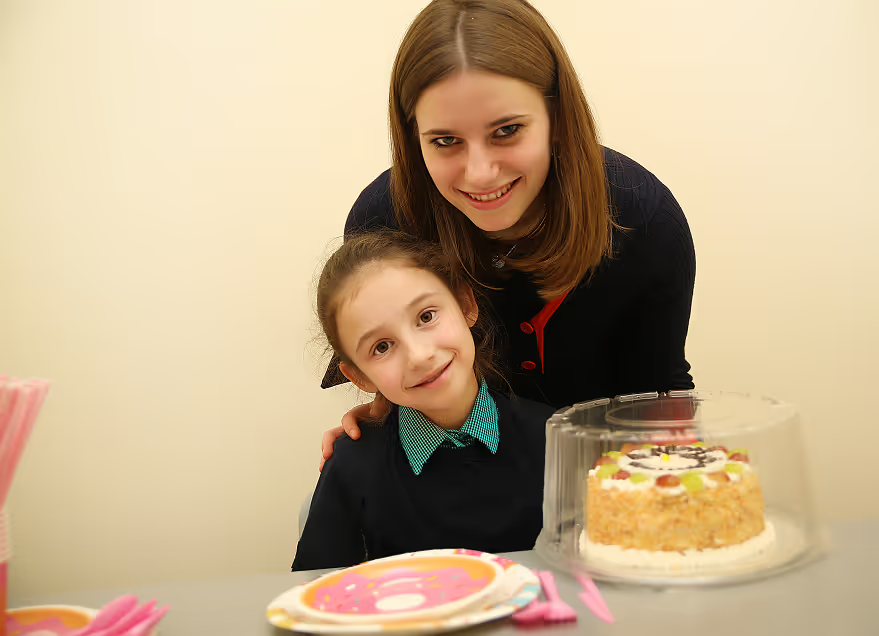
We also encouraged her to inform Sheindy’s school about the situation. Simultaneously, we matched Sheindy with a mature, sensitive mentor and briefed her on the family’s context. Sheindy engaged immediately—showing calmness, respect, and interest in creative activities like baking and crafting.

Within short time, Mrs L reported that “my life has changed.” Family therapy helped her speak openly with her children about their father’s condition, which brought huge relief. With new clarity, Sheindy began using her mentoring sessions to talk through her feelings and even made cards and a sequin pillow for her father. Her school noted a “remarkable difference” in her behaviour.

When her father returned home after 7 months, Sheindy told her mentor, “First I was so angry with him… now I’m happy he’s back.” At the six-month review, Mrs L shared that Sheindy’s anxiety and tense behaviours disappeared—she was sleeping better and had become more enjoyable to be around. Although some tantrums remained, they now felt manageable and appropriate to the situation.

Read More

Impacting Schools

Real stories. Unreal transformation

29

Pupils referred to Children and Young Peoples Mental Health Services.

31

New whole-school policies and practices implemented.

179

Girls received early mental health support.

Mrs C S Eis, Headteacher, Beis Malka Secondary School, benefitted from Sunbeam’s IWAS program

“I would give this project 10 out of 10. It gave us the confidence and tools to do this work well — and keep it going.

Working with Sunbeams through the IWAS project has completely changed how we approach emotional wellbeing in school. From the very first audit, it was clear this wasn’t going to be a one-size-fits-all programme. It was thoughtful, practical and incredibly responsive to what we were already doing, and where we needed support. As part of the programme, we received monthly visits from Shanni, a CAMHS clinician, who joined our senior leadership and SENCO team for three-hour sessions. These meetings became an anchor point — giving us space to reflect, build skills, and make confident decisions about our pupils’ needs. With her support, we introduced structured tutorials between students and teachers, launched a shared system for logging concerns, and developed clarity around when in-house support is enough and when onward referral is appropriate.

I can honestly say we’ve seen changes across the whole school: staff are more confident, our systems are clearer, and our students — especially those who previously struggled — are more emotionally settled, more engaged, and more able to thrive. This whole-school approach to wellbeing has helped us move from reacting to problems to proactively creating a safer, more supportive school experience for every girl.”

Read More

Our Youth Network

Real feedback. Unreal execution.

228

Young people shared their feelings and opinions.

128

Parents listened to our young girls’ feedback

22

Schools shaped change based on our girls’ and young women’s opinions.

Through Sunbeams’ Youth Network, girls raised concerns about how emotional difficulties were being handled in schools.
They described a pattern they were seeing repeatedly: when a pupil struggled emotionally or behaviourally, school staff often felt unsure or anxious about responding and defaulted to recommending psychological therapy. Girls shared how this approach sometimes caused harm — families felt pressured into expensive private therapy that wasn’t always appropriate or well-regulated, difficulties were over-medicalised, and the underlying issue (such as school stress, friendship problems, or family circumstances) was not addressed.

The Youth Network created a space for these experiences to be discussed openly and collectively. With support from Sunbeams staff and clinical oversight, the girls helped articulate a more nuanced message: therapy can be powerful, but only when it is the right support, at the right time.

In response, Sunbeams worked with Youth Network input to develop a practical leaflet for school staff on referring children to psychological therapy. The leaflet clarified which issues may warrant therapy, how schools can support children where therapy is not appropriate, how to have informed and sensitive conversations with parents, and how to navigate NHS and government services versus private options safely and transparently.

The leaflet was circulated to schools and pastoral teams, helping staff feel more confident holding emotional concerns rather than immediately outsourcing them. It supported more proportionate, evidence-informed decision-making and reduced unnecessary escalation to private therapy.

This work demonstrates how the Youth Network enables girls to shape professional practice — turning lived experience into guidance that protects families, strengthens schools’ confidence, and ensures children receive the right support, not just more support.

Read MoreResources

Partner with us so Sunbeams can continue to be the community’s ray of light.